• Financial institutions stand to gain $200–340 billion in annual value from AI investments, but their legacy infrastructure often gets in the way. While fintech startups build on modern tech stacks, established banking, financial services, and insurance (BFSI) organizations must find a path to AI innovation without disrupting decades of critical infrastructure investment.

    A recent survey by Turing, “Insights from Industry Leaders: A View from the Edge of Applied AI,” found that 75% of banks, insurers, and financial firms rank legacy system compatibility as critical for successful AI integration, compared to just 54% of retailers and other industries. This gap reveals the unique complexity the financial services industry faces when seeking successful AI outcomes.

    Despite relying on traditional technology architectures, leading banks are finding practical ways to enhance their operations with AI. They’re using four approaches that deliver measurable results and minimize disruption to critical systems:

    1. Enhance existing core systems for successful AI adoption

    Most financial institutions run on banking platforms that they developed years ago—systems that weren’t designed with AI in mind. Yet, these platforms process billions of workflows and critical data pipelines daily. They can’t simply be ripped and replaced.

    Unlike their fintech competitors, established banking firms face the “enhance, don’t replace” challenge. They must find ways to add AI capabilities without compromising their operational backbone—an engineering problem that requires expertise in financial operations and a deep understanding of AI implementation.

    The most effective strategy for legacy system modernization employs a layered approach. Rather than undertaking high-risk complete replacements, firms achieve significant efficiency gains by:

    • Establishing API-based connection points between core systems and AI capabilities.
    • Decomposing monolithic structures into modular components.
    • Creating targeted pathways for data exchange between legacy and modern systems.

    It’s possible to maintain operational stability while transforming operational efficiency. By building modern architecture around existing infrastructure, organizations can protect systems that reliably process billions of daily transactions and deliver AI innovation where it creates measurable value.

    2. Use strategic integration frameworks

    Successful banks and insurance providers take a problem-first approach to their AI initiatives. Rather than asking, “Where can we add AI?” they ask, “Which specific business challenges would AI solve most effectively?”

    API-based integration frameworks create connections between established systems and modern AI capabilities. As demonstrated by Turing’s AI-powered stock trading platform, financial institutions can use APIs to extract data from multiple sources in real time, process it through advanced models, and return actionable insights without disrupting core infrastructure.

    This approach enables data flows between legacy systems in banking and new AI capabilities. By starting with well-defined internal processes before expanding to customer-facing applications, financial firms can build organizational confidence through a series of visible and impactful wins.

    3. Modernize financial infrastructure while maintaining compliance

    Regulatory requirements create unique considerations for BFSI organizations implementing AI. With 51% of financial institutions citing regulatory risks as a top challenge, compared to 29% of technology companies, compliance must be tightly woven into every integration decision.

    To achieve proper validation without disrupting operations, test new AI capabilities alongside existing processes. This parallel approach enables continuous service while generating evidence that AI-enhanced systems meet regulatory standards.

    Security is paramount during AI implementation in banking. Not surprisingly, when it comes to BFSI digital transformation and AI integration, financial services firms have significantly more concern around cybersecurity and data protection (79% vs. about half for other industries). Implement comprehensive data governance throughout the AI integration process to ensure compliance, security, and data integrity.

    4. Track AI implementation success beyond cost reduction

    Measuring AI success requires looking beyond cost reduction alone. While ROI remains essential (84% of BFSI executives rate it as extremely or very important), customer satisfaction ranks even higher (86%), and operational efficiency (83%) is also a top priority.

    Accordingly, financial firms and insurers should track AI’s impact across multiple dimensions to confirm they are achieving their desired outcomes. Depending on your AI goals, your key performance indicators (KPIs) may include customer experience metrics (satisfaction scores, retention rates), revenue impacts (cross-selling success), operational indicators (processing time, error rates), and risk measurements (faster fraud mitigation).

    Financial institutions that implement comprehensive measurement frameworks from the start consistently show greater success with their AI integration initiatives because they can quickly identify what’s working and what isn’t. When the time comes, they also have the insights needed to make smarter decisions about future AI investments.

    AI in financial services: The legacy system modernization advantage

    The BFSI firms that achieve a decisive AI advantage aren’t necessarily those with the largest data science budgets or the most sophisticated models. They’re the ones that most effectively connect advanced AI capabilities with their existing systems.

    AI implementation in financial services demands specialized expertise. Success depends on partnering with experts who understand both financial operations and AI, enabling tailored solutions for industry-specific workflows. A strong partner aligns AI initiatives with business goals and KPIs, using readiness assessments to identify blockers, improve data quality, and deliver quick wins.

    Data scientists observed that organizations taking a strategic approach to AI integration in BFSI achieve substantially higher returns than those pursuing technical sophistication alone. By applying these proven approaches to your specific AI and legacy infrastructure challenges, your organization can transform AI from a technology-centered initiative into a practical business capability that delivers lasting value.

  • In the rapidly evolving world of technology, AI is no longer just a buzzword; it’s the most disruptive technological innovation of the 21st century. According to a 2024 McKinsey report, 70% of companies are already harnessing AI to streamline operations and enhance decision-making processes, demonstrating its profound impact across industries.

    Among those at the forefront of this revolution are data scientists. These modern-day alchemists turn raw data into golden insights, driving decisions that propel businesses forward. Sometimes even the wizards of data science need a little magic, and that’s where AI steps in. Let’s explore how data scientists are harnessing the power of AI to become more effective and efficient in their roles.

    Automating the mundane

    Data science is inherently complex and involves a multitude of tasks ranging from data collection and cleaning to analysis and interpretation. Traditionally, these tasks have been time-consuming and often tedious. However, AI has introduced a wave of automation that liberates data scientists from the drudgery of repetitive work, allowing them to focus on more strategic and creative aspects of their jobs.

    Take data cleaning, for instance. This foundational step is crucial for ensuring the quality of insights but is often considered the least glamorous part of the process. AI-powered tools can now automate much of this task by identifying and rectifying errors, handling missing values, and normalizing data formats. A recent Gartner study revealed that data scientists spend up to 60% of their time on data preparation, but AI can reduce this effort by up to 40%, allowing them to focus more on analysis and strategy. This not only speeds up the process but also enhances accuracy, as AI algorithms are less prone to human error.

    The future of predictive analytics

    Predictive analytics is where data science truly shines, and AI is amplifying its power exponentially. Traditional statistical models have long been used to forecast trends and behaviors, but AI algorithms—especially those based on machine learning—offer a more robust and dynamic approach.

    Machine learning models can process vast amounts of data at unprecedented speeds, learning and improving over time. This iterative learning process allows AI to uncover intricate patterns and relationships within the data that might elude human analysts. 

    For example, in financial services, AI-driven predictive models can analyze market trends, customer behavior, and economic indicators to provide highly accurate investment forecasts. A Forrester report also found that companies leveraging AI for predictive analytics saw a 20% increase in forecast accuracy. This additional level of insight empowers data scientists to make more informed recommendations, driving better business outcomes and optimizing models for ROI.

    Natural language processing: Making sense of text data

    A significant portion of the world’s data is unstructured, particularly in the form of text, and it’s being created quicker than you’d imagine. Emails, social media posts, customer reviews, and more hold valuable insights if one can store, clean, and decode them. Natural Language Processing (NLP), a branch of AI, equips data scientists with the tools to do just that.

    NLP algorithms can parse through massive volumes of text data, extracting sentiment, identifying key themes, and even summarizing information. More advanced NLP models can even identify and correct coding errors, which allow data scientists to scale models with greater confidence

    This capability is invaluable for businesses looking to understand customer sentiment, monitor brand reputation, gain insights into market trends, or drive operational clarity. For instance, a company launching a new product can use NLP to analyze social media feedback in real-time, enabling swift adjustments to marketing strategies based on customer reactions.

    According to a 2024 IDC report, businesses utilizing NLP data insights experience a 30% improvement to customer satisfaction scores, as they can more effectively analyze and respond to customer feedback.

    Real-time data analysis

    The ability to process and analyze data in real-time is a game-changer for many industries, and AI is at the heart of this capability. Real-time data analysis allows businesses to respond to events as they happen, providing a significant competitive edge. According to a recent Splunk report, 80% of companies have seen an increase in revenue due to the adoption of real-time data analytics, as it enabled faster decision-making and operational decision making. 

    In sectors such as e-commerce, AI-driven real-time analytics can optimize inventory management, personalize customer experiences, and improve supply chain efficiency. For data scientists, real-time analysis tools mean faster and more accurate decision-making. They can set up automated systems that monitor data streams, trigger alerts for anomalies, and even take predefined actions without human intervention. This not only enhances operational efficiency but also ensures that businesses can capitalize on opportunities and mitigate risks promptly.

    Enhancing model accuracy and robustness

    Building accurate and robust models is a core responsibility of data scientists, and AI is playing a pivotal role in this area.

    Advanced AI techniques such as deep learning can handle complex datasets with high-dimensional features, providing unparalleled accuracy in fields like image and speech recognition. Moreover, AI frameworks can perform automated machine learning (AutoML), which simplifies the model-building process, making it accessible even to those with less expertise. This democratization of data science tools means that businesses of all sizes can benefit from cutting-edge analytics, driven by AI-empowered data scientists.

    Facilitating collaboration and knowledge sharing

    AI is also transforming the way data scientists collaborate and share knowledge, with research from Stanford showing 25% average improvement in AI-enabled team productivity. Platforms powered by AI can facilitate better project management, version control, and knowledge sharing within data science teams. For instance, AI-driven code review tools can automatically check for errors, suggest improvements, and ensure adherence to best practices. This not only streamlines the development process but also enhances the overall quality of the work.

    AI can also aid in the creation of more intuitive and interactive dashboards and visualizations, making it easier for data scientists to communicate their findings to non-technical stakeholders. By bridging the gap between complex data insights and business decision-makers, AI ensures that valuable information is not lost in translation.

    The future of data science: continuous evolution with AI

    As AI continues to evolve, its integration with data science will only deepen, bringing about new innovations and efficiencies. The future holds promise for more sophisticated AI models that can understand more nuanced context, learn from smaller datasets, and provide even more accurate predictions, driving unprecedented business value..

    AI is not just a tool for data scientists; it’s a powerful ally that enhances their capabilities, allowing them to focus on what they do best: deriving actionable insights from data. By automating mundane tasks, enhancing predictive analytics, making sense of unstructured data, enabling real-time analysis, improving model accuracy, and facilitating collaboration, AI is transforming data science into an even more dynamic and impactful field. As we move forward, the synergy between AI and data science will continue to unlock new possibilities, driving innovation across industries.

  • On December 12, 2024, the third installment of our AGI Icons series was held in Vancouver. The event featured Jeff Dean, Chief Scientist of Google DeepMind and Google Research, and Jonathan Siddharth, Co-Founder and CEO of Turing. 

    Turing’s AGI Icons series is designed to bring together AI’s leading minds and host deep dialogues on the biggest barriers and achievements driving innovation. The conversation with Dean and Siddharth provided an exclusive look into Google’s latest model, Gemini 2.0 Flash, and the ways it’s poised to accelerate AGI advancements.

    Dean’s journey with neural networks

    Siddharth dove into the heart of the conversation: Dean’s journey with neural networks that culminated in Gemini 2.0.

    “You’ve had a fascinating history with neural networks that goes quite far back. Can you talk us through what got you [started] on your journey?”

    Jeff Dean’s fascination with neural networks began during his undergraduate studies at the University of Minnesota in 1990. 

    “I was intrigued because they seemed like this really nice general learning mechanism that could solve problems that we couldn’t solve any other way. I felt like if we could just get more computation, we could train bigger and bigger neural networks.”

    Inspired by his thesis, Dean undertook a project exploring parallel training strategies on a 32-processor hypercube machine. 

    “I was naïve,” Dean admitted. “I thought training neural networks on 32 processors would revolutionize everything. What we really needed was a million times more compute power.”

    Though the technology of the era was insufficient, these experiments laid the foundation for his future work in model and data parallelism,

    Although he admits his efforts “weren’t very practical” for real-world applications at the time, he kept the concepts “in the back of my head.”

    Fast-forward to 2011, when Dean was at Google. “I bumped into Andrew Ng because he had signed on as a one-day-a-week consultant.” 

    When asked what he was doing there, Andrew replied “I don’t know yet, but my students at Stanford are starting to play with neural networks and getting good results.” This immediately sparked Dean’s interest. 

    “That was when I started the Google Brain effort. And one of our first things we did was build a parallel and distributed system for training neural networks.”

    Partnering with Andrew Ng, Dean’s focus on large-scale neural network training using Google’s infrastructure marked a turning point in AI history.

    Neural networks at scale

    Dean recounted how Google Brain tackled neural networks at scale, despite the limitations of hardware at the time.

    “We didn’t have GPUs in our data centers, so we had lots and lots of CPUs,” Dean explained. “We used 2,000 computers, 16,000 cores to train interesting unsupervised computer vision models, speech recognition acoustic models, word embedding systems, and eventually Long short-term memory (LSTM) for sequence-to-sequence models”

    The foundational principle was simple: “We want to train very large models using lots and lots of compute and more data.”

    This mantra resonated with Siddharth, whose mission is to solve the next bottleneck in AI advancement – moving beyond compute with expert data and human intelligence. “Bigger model, more data, better results.”

    Dean agreed. That mantra became the bedrock of modern AI advancements.

    “I feel like if the scaling laws could be represented by a person, it would probably be you,” Jonathan joked. “You saw the power of neural networks early, the power of scaling up compute early, distributed training, DisBelief…”

    Dean laughed, recalling the origins of DisBelief, an internal distributed training system at Google. “Yeah, and it was also a little bit of a double meaning because some people I talked to within Google were very skeptical that neural networks would work.” 

    “So I said, ‘Ah, we’ll call it DisBelief, and we’ll show them.’”

    Jonathan nodded, reminiscing about the era when neural networks weren’t always the go-to choice.

    “When I was taking Andrew Ng’s class at Stanford in the mid-2000s, the belief was that for text classification, you probably wanted to use a support vector machine.” Siddharth continued, “Neural networks were—well, there was that phase, right?”

    The genesis of Google DeepMind

    The discussion then shifted to DeepMind and how their work complemented Google Brain’s efforts and culminated in the creation of Gemini. 

    Initially, the two teams operated independently. Dean explained, “Within the Brain team, we focused on large-scale training, scaling things up, attacking a bunch of practical problems in vision, speech recognition, and language. DeepMind had focused a bit more on much smaller-scale models, reinforcement learning as a way of learning to do things that you couldn’t easily do with supervised learning.”

    As their research agendas converged, merging efforts became the logical step. Dean’s leadership helped unify these teams into Google DeepMind, leveraging their combined strengths to develop state-of-the-art multimodal models.

    “Instead of multiple independent efforts where we fragmented our compute and ideas, we decided to work on one unified model that’s multimodal. By combining our efforts, we’ve achieved something greater than the sum of its parts.”

    Introducing Gemini 2.0 Flash

    This unified approach became Gemini, Google’s flagship multimodal AI model. Siddharth then used the opportunity to transition into the Gemini announcement, asking, “We heard about Gemini 2.0 Flash. Is it number one on SWE-bench verified now?”

    “Yeah, I believe it is,” Dean nodded. “We have this expression around our coffee machine in the micro kitchen at work: Such a good model.

    “So what’s new in Gemini 2.0 Flash?” Siddharth probed on behalf of the audience. 

    “One is we’re announcing the 2.0 series of Gemini and coming out with the Flash model that people can use today,” he said. “The Gemini 2.0 Flash model outperforms on a bunch of academic benchmarks, at the latency and speed characteristics of 1.5 Flash but with improved quality.”

    Dean then highlighted several innovations that set Gemini 2.0 apart:

    • Multimodal capabilities – Gemini 2.0 can process and generate native audio, video, and end-to-end images within a single model, enabling seamless end-to-end learning.
    • Agentic workflows – Features like Project Mariner allow Gemini to execute complex tasks, such as booking flights or navigating websites, while maintaining user control through safety guardrails.
    • Real-world applications – The model brings practical improvements over its predecessors with tools like Project Astra, a personal assistant that integrates seamlessly into daily life, and assists with real-world software engineering tasks like code generation and debugging.

    In essence: “These models can take in what you’re sensing and augment your knowledge in a natural and fluid way,” Dean explained.

    Scaling the future of AI

    The conversation then shifted to broader AI challenges and opportunities. Looking ahead, Dean outlined the key frontiers for AI. “You’ll see more interleaved processing and models thinking about what to do next, trying different approaches and learning from failed attempts,” he said. 

    He also underscored the need for modular and sparse model architectures, advocating for designs inspired by the brain’s organic and efficient structure. Ultra-sparse models, which activate only the necessary parameters during inference, represent a path to greater efficiency.

    Siddharth and Dean also discussed the role of software engineering in advancing AI. “As AI gets better at coding, what’s your advice for engineers?” posed Siddharth. 

    Dean’s response was reassuring: “Some people are worried that AI is going to write software and there won’t be as much need for software engineers. I don’t subscribe to that at all. If anything, AI will enable engineers to be much more productive and spend time solving higher-order problems.”

    Ethical AI and the value of expert human data

    The conversation moved to the topic of ethical AI, focusing on the value of human-generated data and the need for fairness, transparency, and proper recognition of contributors.

    Audience members raised questions about the implications of using human data to train LLMs  and the challenge of ensuring equitable value distribution. Dean emphasized the importance of balancing innovation with responsibility:

    “We need community-driven solutions to ensure fairness,” he said. He noted Google’s opt-out policy as a step in the right direction, but stressed that the industry must do more to balance innovation with responsibility. He also highlighted the need for community-driven solutions to recognize and reward data contributions.

    One audience member asked: “There must be a lot of data folks working hard to prepare the data for models like Gemini. How do we ensure they get the recognition they deserve in this large community?” 

    Dean’s response underscored the collective nature of building cutting-edge AI models like Gemini: “The Gemini models to-date are the efforts of an amazing team at Google from all across Google DeepMind, Google Research, and our infrastructure teams. Some work on data, others on model architecture, and many others on infrastructure software or post-training processes—all of which are crucial.” 

    He added: “It’s important to recognize that creating these models takes a collective effort, and we also rely on external partners like Turing for data curation and labeling.” 

    Siddharth emphasized this point further, noting, “Data is the foundation of everything we do, and it’s important to ensure its value is shared equitably.”

    Looking ahead–the future of AI

    In a surprise announcement, Siddharth announced the creation of the Jeff Dean Award, which will recognize engineering excellence among Turing’s global community of developers. 

    “This award will spotlight those pushing the boundaries of what’s possible,” Siddharth explained.This honor celebrates engineers who have made significant contributions to advancing AI and software development.

    “It’s an honor to be part of a community that’s driving meaningful change.” Dean expressed his gratitude, emphasizing the importance of fostering a worldwide community of innovators. “I love the ethos of bringing people together all over the world to work on awesome stuff.”

    As Siddharth noted, “You have such a unique vantage point to see where AI is headed. Where do you see the AI trajectory for the future that you can predict?”

    Dean reflected on the extraordinary potential of AI.

    Dean’s vision for the future of AI was ambitious yet pragmatic, painting a picture of systems that are increasingly capable, efficient, and collaborative.

    “You’ll see a lot more interleaved processing,” Dean began, “where models think about what to do next, try different approaches, and backtrack when something doesn’t work. Achieving robust multi-step reasoning is one of the big challenges ahead. Right now, models might break down a task into five steps and succeed 75% of the time. But what we really want is for systems to break a task into 50 steps and succeed 90% of the time.”

    He emphasized that building this level of reliability will unlock entirely new possibilities. “The ability to handle truly complex, multi-step tasks with consistent success—that’s when these systems will feel transformative in their problem-solving abilities.”

    Dean concluded with a call for continued collaboration between engineers, researchers, and the broader AI community. “We’re just scratching the surface of what these systems can do,” he said. “The future lies in enabling people to accomplish complex tasks with ease and creativity. AI will augment human intelligence, helping us solve problems we’ve only dreamed of.”

    In Summary

    The conversation encapsulated the ethos of Turing’s AGI Icons series—bringing together thought leaders to illuminate the challenges and opportunities shaping AI. 

    As Siddharth aptly summarized: “This is just the beginning. The best is yet to come.”

  • AI is no longer a distant concept—it’s becoming the foundation of what we build, how we work, and what’s possible to achieve—and it’s not slowing down. With 82% of companies already using or planning to integrate AI solutions, the demand for skilled and knowledgeable “AI professionals” has never been higher. 

    The umbrella for who qualifies as an “AI professional” has also never been broader. Fields as diverse as healthcare, finance, marketing, manufacturing, education, and more are racing to implement and scale AI into their daily operations. They’re harnessing this tech in new and innovative ways like advancing scientific research, improving customer interactions, and precise forecasting.

    This means that staying relevant in the workforce isn’t just about understanding code or building applications—it’s about understanding how AI can reshape what we build and how it impacts the world around us. Whether you’re a software developer, data scientist, product manager or researcher—your expertise is essential for guiding ethical, safe, and impactful AI in your field.

    To thrive in this landscape, it’s essential to understand the different pathways within AGI, determine where your skills align, and strategically position yourself to capitalize on these opportunities.

    What is an AGI professional?

    An AGI professional works with AGI technologies to either advance the field or deploy solutions in real-world applications.

    For technical professionals, this might mean developing and deploying AI solutions that transform how businesses operate, or refining algorithms that push the boundaries of what AI can achieve. For business professionals, AI offers tools to optimize operations, enhance customer experiences, and drive strategic decision-making, turning data into actionable insights. Researchers and academics can leverage AI to explore new frontiers in their fields, from uncovering patterns in large datasets to making groundbreaking discoveries in medicine, social sciences, or engineering. 

    AGI deployment vs AGI advancement

    Not all AI professionals serve the same function. Today, working with AGI can be grouped into two categories—AGI advancement and AGI deployment. Understanding these distinct roles will help you determine where your skills and passions align, allowing you to make the most significant impact.

    AGI deployment

    AGI deployment focuses on the practical application of AI and LLM technologies. As part of this function, your role involves building, testing, refining, and integrating AI solutions into real-world applications. You ensure that AGI innovations are scalable, user-friendly, and deliver tangible value to businesses and consumers. Typical tasks include performance optimization, security monitoring, and data management—essentially, you are the bridge that brings advanced AI capabilities into everyday use.

    AGI advancement 

    In contrast, AGI advancement is about exploring the unknown and pushing the boundaries of AI’s potential. If you choose this path, you’ll be involved in cutting-edge research, developing new algorithms, and creating frameworks that enhance AGI’s capabilities. Your work will lay the foundation for future innovations that deployment teams will bring to market. Whether it’s improving model accuracy or enhancing multimodality, your contributions in AGI advancement drive the future of technology.

    Finding your fit in AGI

    These roles, while distinct, are deeply interconnected. AGI advancement drives new possibilities, while deployment ensures these innovations are realized in practical, usable forms.

    To excel in AGI, it’s important to understand how both advancement and deployment functions work together. Although this isn’t an exhaustive list, it helps explain the core differences between each function to see where your skills and interests best align.

    AGI deployment

    Sample responsibilities:

    • Building, integrating, and scaling AI solutions
    • Testing and debugging 
    • Security and compliance monitoring
    • User interface development
    • Performance optimization 
    • Data management Roles

    Sample roles:

    • Software developers & ML engineers
    • Data analysts
    • Project managers
    • Security, ethics, and compliance experts 
    • Industry experts, business specialists, and researchers

    AGI advancement

    Sample responsibilities:

    • Model training and enhancement to improve capabilities and performance
    • Data analysis and modeling 
    • Cross-disciplinary collaboration with industry experts 
    • Ethics, safety, and academic research

    Sample roles:

    • AI, ML, and specialized researchers
    • Business specialists working in HR, marketing, finance, and more
    • Cognitive scientists and PhDs
    • Data scientists and annotators
    • Prompt engineers and software developers 

    AGI advancement and deployment have a symbiotic relationship. As these teams collaborate, feedback loops are established where insights from deployment inform further research and development. This iterative process ensures AGI continues to evolve in ways that are both technologically advanced and business-aligned.

    Build and scale your AI expertise

    As AGI technology becomes more wide-spread across industries and daily workflows, it presents more opportunities for workers of all backgrounds to get involved. 

    User-friendly platforms, low-code tools, and cloud-based services make AI more accessible to non-tech workers and simplify workflow integrations. This democratization allows people in fields like healthcare, education, or finance harness AI for tasks like data analysis and automation without needing deep technical expertise.The growing availability of online courses and AI-driven tools empowers broader professionals to leverage AI, driving innovation across industries and closing the gap between technical and non-technical roles. 

    Working in AGI isn’t just about having technical skills—it’s about understanding and adapting to the broader role AI plays in shaping the future. Here’s how you can master AGI in your career and harness it to achieve your long-term goals:

    1. Get familiar with AGI: Start by immersing yourself in the world of AGI through online courses, webinars, and academic research. Keep up with the latest developments and deepen your understanding of AI/ML concepts so you’re always ready to adapt to new advancements.
    2. Hands-on practice: Theoretical knowledge is essential, but hands-on experience is where you truly hone your skills. Engage in real-world AI projects, whether through your current role or personal initiatives, to reinforce your learning and grow your abilities.
    3. Collaborate and network globally: Working in AGI often means collaborating with international teams. Embrace this opportunity to learn from diverse perspectives and broaden your professional network. Engaging with global experts not only enhances your skills but also opens doors to new opportunities.
    4. Continuously evolve: AI evolves rapidly. Make continuous learning a part of your career strategy. Seek out mentorship, attend conferences, and always be on the lookout for ways to push your knowledge and skills further.

    AI ethics and policy

    In this rapidly evolving field, those who strategically harness AGI will lead the way in innovation, growth, and global transformation. The future is here, and by aligning your career with AGI, you’re ensuring you’ll be at the forefront of this revolution. Now is the time to find your fit, scale your expertise, and make your mark on AI innovation.

  • Model evaluation has emerged as a critical tool to enhance LLM’s performance and ROI. By systematically identifying inefficiencies, uncovering growth opportunities, and providing predictive analytics, model evaluation can significantly impact a model’s performance, keeping it on track with its intended purpose and improving effectiveness and reliability.

    However, a one-size-fits-all approach to model evaluation is ineffective. Evaluations must consider diverse applications, tailored performance metrics, adaptability, scalability, ethical considerations, and real-world impact. Tailoring model evaluation to your business needs ensures you get the most value from your AI model, keeping it accurate, efficient, and reliable.

    5 Misconceptions About LLM Evaluation

    Model evaluation is crucial for ensuring AI models are accurate, efficient, and reliable. Yet, many companies fail to prioritize it, overlook its importance, or struggle to implement it effectively—oftentimes due to some common misconceptions.

    Misconception #1: Costly investment vs actual ROI

    Many believe that model evaluation is prohibitively expensive. However, thorough evaluations can lead to significant long-term cost savings by preventing errors and reducing inefficiencies, ultimately optimizing resources. These savings are often difficult to quantify because they result from the elimination of risk.

    Consider the 1998 Mars Climate Orbiter mission, which failed to conduct proper evaluation before launching their spacecraft. The lack of assessment created cost savings upfront, but missed a critical unit conversion error—the navigation software used imperial units while the ground team used metric units. This oversight wasn’t identified before deployment, leading to the $125 million spacecraft’s loss. 

    Misconception #2: Evaluation uses universal frameworks

    Not all evaluation frameworks work for every model. Different models require tailored frameworks to capture critical nuances, with application-specific metrics and benchmarks providing the most accurate assessments.

    Misconception #3: Model evaluation is a one-time process

    Another misconception is that model evaluation is a one-time process. Effective model evaluation is iterative, adapting to new data and evolving requirements, ensuring scalability and continuous improvement.

    Misconception 4: Evaluation metrics are only about accuracy / factuality

    While accuracy is important, effective evaluation encompasses a variety of metrics, including precision, F1 score, computational efficiency, and user satisfaction, providing a holistic view of model performance.

    Misconception #5: Evaluation is for regulatory compliance

    It’s a common belief that evaluations are only necessary for regulatory compliance. In reality, evaluations validate a model’s real-world value and feasibility before committing extensive resources, refining the model to better meet business needs.

    Defining Your Model Objectives 

    To choose the right evaluation framework, start by clearly defining your model’s objectives. Understanding the primary purpose of your LLM will guide you in selecting the most appropriate evaluation criteria. 

    What do you need your LLM to do?  

    Define your business goals and how an LLM can support these objectives. Identify key areas where AI can provide value or solve critical problems. Then identify the specific tasks and functions you want the LLM to perform, such as:

    • Automated response systems: Virtual assistants for customer service, support, and troubleshooting
    • Content Generation and Summarization: Creating marketing copy, blog posts, social media content, and summarizing documents
    • Code Generation and Software Development: Writing, debugging, and automating coding tasks
    • Data Analysis, Forecasting, and Insights: Uncovering trends and forecasting future insights

    How will you measure success? 

    Once you have determined the purpose of your LLM, the next step is to identify key performance indicators (KPIs) that matter for your application. 

    KPIs could include accuracy, fluency, coherence, relevance, precision, recall, computational efficiency, scalability, robustness, user interaction, compliance, security, ethical reasoning, and ROI. Setting clear performance goals will help you measure the success of your model and ensure it meets your business needs.

    Evaluation Frameworks & Strategies

    Based on the identified objectives and KPIs, select the appropriate evaluation frameworks and tools that align with your specific needs. 

    Intrinsic Evaluation Frameworks 

    Focus on the immediate output quality of the model, such as text coherence and accuracy. Automated testing tools like Weights & Biases, Azure AI Studio, and LangSmith can streamline the evaluation process.

    • Automated Testing: Tools like Weights & Biases, Azure AI Studio, and LangSmith automate testing processes, ensuring consistent and thorough evaluations.
    • Continuous Monitoring: Implementing continuous monitoring helps track model performance over time.
    • Benchmarking: Use benchmarks such as BLEU, ROUGE, and F1 scores to measure text coherence and accuracy.

    Extrinsic Evaluation Frameworks 

    Concentrate on the model’s impact in real-world applications. Metrics-based evaluation, task-specific evaluation, human evaluation, user feedback, and robustness checks ensure comprehensive assessment.

    • Metrics-based evaluation: Assess models using specific metrics tailored to the application.
    • Task-specific evaluation: Evaluate how well the model performs specific tasks relevant to its use case.
    • Human evaluation: Involve human evaluators to provide qualitative insights into model performance.
    • User feedback: Gather feedback from end-users to understand the model’s impact and usability.
    • Cross-validation and holdout validation: Use these techniques to ensure your model generalizes well to new data.
    • Robustness checks and fairness testing: Ensure the model performs reliably under various conditions and is free from bias.

    Use Established Benchmarks & Evaluation Tools 

    Utilize well-known benchmarks and datasets to ensure comparability with other models. Benchmarking provides a standardized way to measure model performance across various tasks, offering insights into how your model stacks up against the competition.

    • GLUE Benchmark: This benchmark is designed for natural language understanding tasks and includes a diverse set of challenges that test different aspects of language comprehension.
    • SuperGLUE: Building on the GLUE benchmark, SuperGLUE introduces more complex tasks and comprehensive human baselines, pushing models to their limits and providing a more rigorous assessment.
    • HellaSwag: This benchmark focuses on sentence completion tasks, evaluating the model’s ability to understand and predict the next part of a text sequence accurately.
    • TruthfulQA: An essential benchmark for measuring the truthfulness of model responses, ensuring that the information generated by the model is accurate and reliable.
    • MMLU: The Massive Multitask Language Understanding benchmark evaluates a model’s ability to handle multiple tasks simultaneously, testing its versatility and robustness across different domains.

    By utilizing these established benchmarks, you can ensure that your model’s performance is assessed against high standards, providing a clear picture of its strengths and weaknesses.

    Best Practices and Evaluation Use Cases

    Continuous improvement and fine-tuning are vital for maintaining and enhancing the performance of LLMs over time. Here’s how to ensure your models stay at the top of their game:

    • Broader Language Testing: Extend your evaluations to include more programming languages beyond Python. This ensures your model’s versatility and ability to handle diverse linguistic challenges.
    • Continuous Improvement: Regularly update and test your models to refine prompt strategies and enhance LLM capabilities. This iterative process helps in identifying and fixing issues proactively.
    • Continuous Monitoring: Regularly track model performance and retrain as needed based on new data and changing conditions.
    • Feedback Loops: Incorporate user feedback into the evaluation process. Understanding how real users interact with your models and what they need can help align model outputs with user expectations, ensuring higher satisfaction and effectiveness.
    • Performance Tracking: Implement robust performance tracking systems to gather real-time data on how your models perform in various scenarios. This data is crucial for making informed decisions about when and how to update your models.
    • Prompt Optimization: Focus on iterative error correction and using code interpreters to refine your model’s capabilities continuously. This helps in addressing specific issues and improving the overall performance of your models.
    • Regular Benchmarking: Continuously compare LLM performance against human benchmarks to ensure they remain competitive and effective.

    Keeping your models updated and finely tuned is essential for maintaining high performance. Here are some ways companies are using successfully evaluated and iterated models

    • Code Generation: Automate code tasks to boost productivity and focus on complex problem-solving.
    • Error Correction: Use feedback-driven strategies for continuous debugging and optimization, making models more robust.
    • Cross-Language Development: Utilize LLMs for translating code across different programming languages, improving versatilit and expanding your models to various domains.
    • CI/CD Integration: Automate testing and error correction processes within your continuous integration and continuous deployment (CI/CD) pipelines. This ensures that your models are always performing at their best, even as they evolve.

    Let the Experts Evaluate For You

    The time to conduct LLM evaluations can range from a few days to several weeks, depending on the evaluation framework and the specific metrics and tasks being assessed. Optimization techniques such as using lower-precision grading scales and automating parts of the evaluation with LLMs can help reduce the time and cost involved.

    Choosing the right model evaluation framework is essential for optimizing LLM performance. Tailor your evaluation approach to your specific needs, continuously monitor performance, and iterate on improvements to ensure your models remain accurate, efficient, and reliable.

  • One forecast indicates that more than 262.9 to 446.2 million people live with a rare disease worldwide. To develop safe and effective treatments, sponsors and CROs must navigate unique concerns while reducing participant burden, ultimately accelerating ethical, groundbreaking research.

    In this article, we answer the questions:

    • What makes rare disease research different?
    • How can research teams reduce participant burden?
    • What are strategies to improve participant engagement?

    To explore innovative trial design and supply chain strategies specific to rare disease research, read our Rare Disease Considerations eBook.

    What Makes Rare Disease Research Different?

    The greatest challenge within rare disease research is often the scarcity of available illness information. With limited care options available for many rare diseases, the clinical trials designed to study and treat them are often unique. 

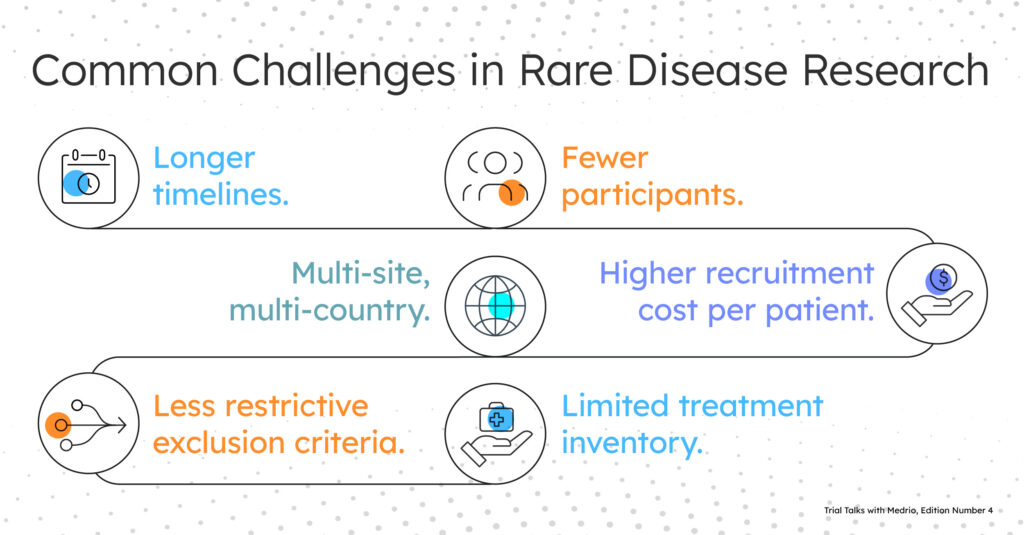
    Common challenges within rare disease research include:

    • Scarcity of available illness information
    • Few existing published clinical trials
    • Smaller pool of potential participants for recruitment
    • Global recruitment may be required for all phases
    • Incomplete understanding of natural history
    • Variable presentation and progression of disease 
    • Additional ethical concerns 
    • Requirement for more sensitive outcome measures to quantify disease
    • Limited access to resources and funding
    • Lack of established endpoints

    Longer timelines

    Clinical trials for rare diseases tend to take longer because of extended recruitment periods. Study teams may also keep participants in the trial for as long as possible to collect more data points.

    Fewer participants

    Rare diseases, by nature, involve a small patient population. As a result, it can be challenging to recruit participants for these trials. There may also be far fewer participants compared to trials conducted in other therapeutic areas. 

    Higher recruitment costs

    Because of the small potential participant pool, recruitment is critical and the cost-per-participant is extra high. Recruitment can be costly and time-consuming, as it requires extensive efforts to identify, reach out to, and enroll individuals who may be eligible and interested in taking part in a study.

    Multi-site, multi-country

    Rare disease trials are more likely to involve multiple sites, potentially spreading across continents, even in early phases. The broad reach often translates into the need for multilingual support for participants. 

    Less restrictive exclusion criteria

    Rare diseases have low prevalence, so finding a sufficient number of participants can be challenging. In early phase rare disease clinical trials, there may be less restrictive exclusion criteria. This adjustment allows for maximum recruitment amongst a limited patient population.

    InlineGraphic Image1 Easing Participant Burden in Rare Disease Research

    Easing Participant Burden in Rare Disease Clinical Trials

    Rare disease clinical trials do not exist in a vacuum. Loved ones and patients with rare diseases are often already managing a heavy load. 

    Living with a rare disease can dominate life—juggling symptoms, medical visits, and care coordination can lead to chaos and overwhelm. Therefore, researchers need to design their trials with the intention of not increasing the burden. 

    Ways to reduce burden include:

    • Reducing travel or providing meaningful assistance
    • Embracing decentralized trial elements 
    • Responding to patient preferences 

    Recognize travel burden

    The travel associated with clinical trial participation is a big barrier to entry. Travel can be expensive and have negative effects on people’s finances, health, and emotions

    For instance, travel may require participants or loved ones to take time off work or school, resulting in a loss of income. Additionally, it may involve being away from family, sleeping away from home, and impacts on overall quality of life.

    Researchers can make travel easier in two ways: 

    1. Reducing the necessity of travel whenever possible
    2. Offering fair compensation, transportation, concierge services, or other meaningful types of travel assistance

    Embrace decentralized elements

    Moving to a decentralized clinical trial (DCT) or hybrid model can reduce participant burden by minimizing travel and site visits. For example, remote consent allows patients to join the trial and connect with the research team without any initial travel whatsoever. 

    Other decentralized trial elements, such as the use of mobile home health nurses, telehealth visits, or home delivery of investigational products, can also lessen participant burden.

    Furthermore, technologies that enable remote trial data capture  drastically reduce the need to commute to research sites. 

    Commonly used technologies include:

    • Electronic consent (eConsent)
    • Electronic clinical outcome assessments (eCOA) including clinician-, patient-, and observer-reported outcomes (ClinRO, ePRO, and ObsRO)
    • Online participant portals
    • Mobile devices
    • Wearable devices

    Respond to patient preferences

    Researchers should be careful not to prescribe patient-facing technologies to participants without first getting their feedback. Researchers should also be careful not to isolate patients unintentionally in their sincere efforts to alleviate other burdens. 

    Some participants prefer in-person visits for social support, while others prefer the ability to be remote. 

    When possible, it is important to provide participants with options so that they can align their participation with their preferences. The goal is to build as much flexibility as possible into any trial. 

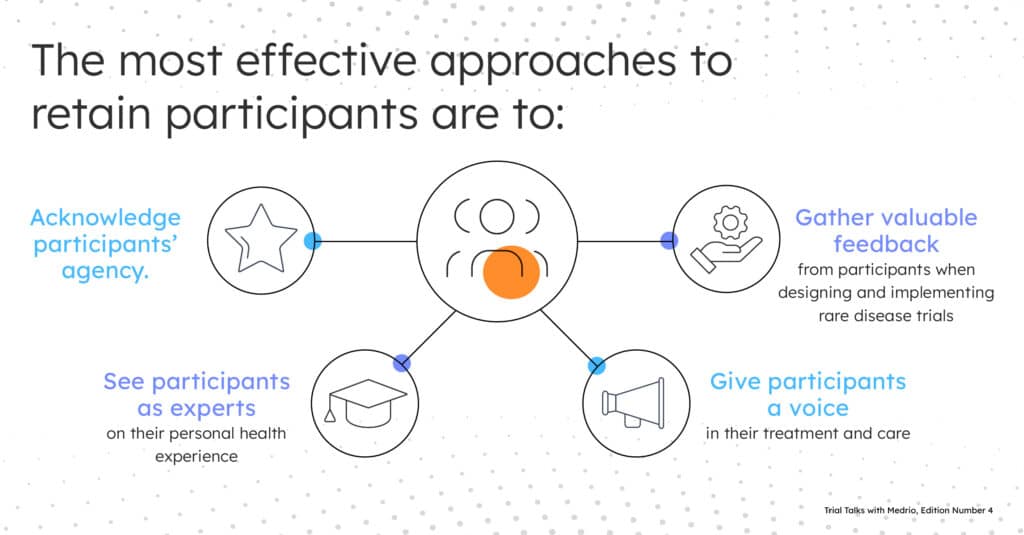
    The most effective approaches to retain participants are to:

    • Acknowledge participants’ agency.
    • See participants as experts on their personal health experience.
    • Give participants a voice in their treatment and care.
    • Gather valuable feedback from participants when designing and implementing rare disease trials.
    InlineGraphic Image2 Easing Participant Burden in Rare Disease Research

    How to Support Patient-Centric Rare Disease Trials 

    When conducting rare disease research, it’s crucial to adopt a holistic approach that considers the network of individuals surrounding the participant. This includes offering essential social and emotional support throughout the trial to all those involved. 

    To further facilitate engagement, it is essential to compensate participants and their loved ones appropriately. Make it easier for participants and their loved ones by paying hotel costs, arranging transportation, or supplying meals and restaurant vouchers. 

    Moreover, recognizing different preferences and offering choices can improve participant engagement and overall experience. The incorporation of decentralized elements, such as eConsent, telehealth visits, or home delivery, may enhance the participation process.

    These methods can help clinical trials for rare diseases become more patient-focused and inclusive, ultimately benefiting all involved.

    ———————

    Subject Matter ExpertsIan Davison, RTSM Subject Matter Expert; Melissa Newara, VP of Subject Matter ExpertiseRod McGlashing, Data Science Subject Matter Expert at Medrio; Tina Caruana, eClinical Solutions (Digital & Decentralized Trials) Subject Matter Expert at Medrio

  • Every person who wants to participate in clinical research should have the opportunity to do so safely. Beyond that, their participation should be with the knowledge that their basic rights and well-being are protected, and all research has been done to provide the best possible outcome.  

    Although most clinical research is governed by those fundamental rights, that hasn’t always been the case. Guidelines exist for a reason, and the story of Good Clinical Practice is filled with those reasons.  

    This article will define Good Clinical Practice, share the history and evolution of its use, and validate why it is a critical aspect of ethical clinical research.  

    A Quick History of Good Clinical Practice 

    Controlled clinical trials have been around since 1747 when James Lind infamously organized the first comparative clinical trial aboard Spanish naval ships. Appalled at the high mortality rate of scurvy among sailors, Lind gathered twelve men into six control arms of two and had them test various treatments for scurvy. Low and behold — the two control groups who were assigned citrus treatments of lemon and oranges saw improvements in their scurvy symptoms. Years later, Lind’s findings would help naval fleets understand the relationship between citrus and scurvy and even help influence royal fleets to make citrus a mandatory dietary staple of sailors.  

    Clinical trials have evolved considerably since the days of Lind. The early 19th century brought about the arrival of the placebo. By the mid-1940s, researchers were introducing new methods such as double-blind controlled trials and randomized curative trials.  

    These progressions resulted in significant medical outcomes, but it also began to raise questions about the safety, ethics, and protection of human subject participation. Throughout history, there have been a handful of clinical mishaps that brought patient safety to the forefront of conversations. Without standard regulations, there was no reassurance that the rights and safety of clinical trial participants were protected, the research was scientifically sound, and the results were credible.  

    As the world learned of human experiments being conducted during World War II, they realized the Hippocratic Oath wasn’t enough to keep clinical research universally ethical.  Regulations emerged, starting with the Declaration of Helsinki in 1964 by the World Medical Organization. Based on the Nuremberg Code, the aim was the to “provide guidance to physicians and other participants in medical research involving human subjects.” Later, the Belmont Report was issued in 1979 by the National Commission for Protection of Human Subjects of Biomedical and Behavioural Research, establishing three critical principles: respect for persons, beneficence, and justice.  

    These early frameworks established a solid foundation for ethical, sound practices in clinical research, but they suffered from regulatory inconsistencies across countries, regions, and even city to city. In order to create a standardized, repeatable set of directions, the International Conference of Harmonisation of Technical Requirements for Registration of Pharmaceuticals for Human Use (ICH) developed a universal set of efficacy guidelines for the industry that they published in 1996. These guidelines, titled Good Clinical Practice (ICH-GCP), provide a standard for all clinical trial activity that assures the data is credible and accurate and that the participant’s rights, integrity, and confidentiality are protected.  

    Guiding Principles of ICH-E6 Good Clinical Practice (GCP) 

    ICH-GCP is maintained through a set of principles. Since initially introducing ICH-GCP nearly 30 years ago, ICH is responsive to changes in how clinical trials are conducted and developed a “flexible framework” for clinical trial conduct. As such, the most recent revision was released in 2021. The principles cover thirteen core themes for sound and safe clinical trials.  

    The principles include: 

    1. Ethical Principles – Clinical trials should be conducted in accordance with good clinical practice (GCP) and applicable regulatory requirements.  
    2. Safety as a Priority – Clinical trial activity should be designed to ensure participant rights, safety, and well-being are protected.  
    3. Informed Consent – Clinical trial participants should be well-informed, partaking voluntarily, and freely offer informed consent
    4. IRB/IEC – Clinical trials should be objectively reviewed by an independent ethics committee (IEC) or institutional review board (IRB).  
    5. Prior Research – The purpose of clinical research should be scientifically sound and based on established scientific knowledge.  
    6. Qualified Staff – Clinical trials should be conducted by experienced and trained individuals.  
    7. Quality by Design – Clinical trials should be proactively designed with quality built into the study protocol and procedures.  
    8. Anticipate Risks – All trial processes and risks should be proportionate to the inherent risks in the trial and the importance of the information being collected.  
    9. Proper Protocol – Trial protocol should be clear, concise, operationally sound, and well-designed for patient protection and data accuracy.  
    10. Data-Driven Results – The results generated from the trial should be reliable and sufficient to provide confidence in the trial data and results.  
    11. Record Data – All roles, responsibilities, and duties within the clinical trial should be clear and documented.  
    12. IP Management – Investigational products (IPs) should be manufactured in accordance with Good Manufacturing Practice (GMP) and be handled in accordance with product specifications.  
    13. Medical Qualification – Medical care provided to a patient and any medical decision made on behalf of a patient should be the responsibility of a qualified medical physician.  

    Why Good Clinical Practice is Necessary 

    Research and Data Collection

    Clinical research has been around formally for hundreds of years, but it took until relatively recently for global standards to be enacted. This is largely because clinical research is vast – spanning across diverse industries from medical devices to pharmaceuticals, covering various subjects from humans to animals, and implementing a variety of methods, tools, and data sources.  

    The volume of clinical research has also boomed in recent years. Ten years ago, there were roughly 137,000 registered clinical trials. As of March 2022, 409,300 clinical trials had been registered worldwide, signally a nearly 200% increase in a decade. And it’s worth noting that this increase persisted even despite the impact from COVID-19.  

    All these reasons speak to the need for a global standard of operations. As clinical trials continue to rapidly expand in developing countries or with new technology and data sources, they need guidelines to create a foundation for high quality processes in clinical research.  

    Partners In Good Clinical Practice 

    Good Clinical Practice is necessary from initial study design to final database lock and everywhere in-between. All stakeholders involved in the clinical trial – including contract research organizations (CROs), sponsors, sites, vendors, and staff – should all understand and embrace the principles of GCP in order to work together towards better health outcomes.  

  • It’s 2022—over one hundred years have passed since the women’s suffrage movement; women make up more than half of the college-educated workforce; and the U.S. has our first female Vice President. But, many of us continue to ask, “Is that enough?” (Hint: the answer is a resounding NO!)

    In anticipation of International Women’s Day on March 8th, Medrio’s female leadership were asked to reflect on the state of female equity in the healthcare industry. These are their experiences.

    The Reality of Gender Parity in Healthcare Today

    Despite the fact that women make up over 70% of the healthcare industry, only 30% of executive roles are filled by women and a mere 12% of healthcare CEOs are women.

    Melissa Newara, Senior Director of Subject Matter Expertise at Medrio commented on this phenomenon by noting:

    Melissa

    “It’s not that there is a lack of women in the industry, it’s just that they stall out at middle management and you look up into the C-suite and think, where’d they go?

    Whether due to unconscious gender bias, societal constructs, or a lack of acknowledgement about the problem—the numbers don’t lie and this challenges the entire healthcare industry to not only understand the bias, but identify ways to break it.

    This can feel easier said than done, however. Many of the gender biases that exist, especially in the modern workforce, stem from unconscious biases rooted in outdated gender stereotypes.

    Nicole Latimer, Chief Executive Officer at Medrio, shared:

    “I’ve experienced being paid less than my male colleagues in a similar role or the exact same role. I’ve been paid less than men who reported to and had fewer responsibilities than me. I’ve seen male colleagues who had inferior performance be promoted ahead of me. I admit that I often did not recognize in real time that these things were happening or that these biases were occuring.”

    Nicole

    Practices like these – whether conscious or unconscious – create a gender parity for women that hinders them as they move up the corporate ladder. But evidence shows that organizations with greater inclusion of women in C-level positions were 21% more likely to experience above-average profitability.

    As evidence mounts, the healthcare industry appears to be recognizing the necessity of women holding top positions. Yet, a 2019 study found that half of C-suite healthcare executives believe women are still passed over for promotions based on their gender. That is despite the fact that 59% believe their organization would be more profitable with greater gender parity on the executive level.

    The problem can be even more stark for female leaders of color. As Rochelle Shearlds, Director of Global Customer Success noted:

    Shelly

    “As an African American woman, my experience is unique in that I can’t separate my gender from my race.”

    As Shearlds pointed out, women of color represent an even smaller minority of decision-making roles. A 2020 report from McKinsey found that women of color only makeup 5% of C-suite positions; 7% of VP positions, 4% of SVP positions, and only 3% of health care boards.

    What this construct creates, ironically, is a system where the people who know the least about structural racism and gender disparity have the most power to control how the healthcare field understands and addresses it. This results in an environment where women, and especially women of color, are relegated to more stereotypical roles.

    Shearlds continued, “I have experienced things like being interrupted while speaking or being asked to take notes even though my male counterpart’s role suggested it would make sense for him to complete that task.”

    Newara witnessed similar treatment by citing, “general bullying behavior in meetings…interrupting, speaking over, and ignoring comments by women in the room by both men and women.”

    But, as Vinky Mehta, Manager of the Program Management Office pointed out, standing up to this behavior can also backfire.

    “Being a passionate and strong assertive person, I was sometimes called ‘bossy’. But, when the same traits were shown by a male colleague of mine, he was called a ‘leader’.”

    Vinky

    How Gender Bias Hurts the Healthcare Industry

    So how does this treatment impact the workplace?

    It takes women 3-5 years longer to reach CEO than their male colleagues. Unconscious bias directly impacts how women interact in the workplace and it is a struggle for women to gain the implicit trust that their male counterparts share.

    Women are less likely to self-promote than their male counterparts and they don’t have the easy access to a large network of women leaders or mentors as their male colleagues do.

    Becky

    As Project Management Leader, Becky Capps, pointed out, “There’s a perception that if you haven’t done something that therefore you can’t do it or that you’re not capable of doing it. Managers have to be willing to take a risk on someone and not be biased by their own thoughts.”

    All this directly reflects the disproportionate number of women in the healthcare industry and the lack of women in leadership positions at these same companies.

    When considering these harsh truths, it’s important to recognize how an individual’s experience doesn’t exist in a vacuum, but as consequences that go beyond just the personal.

    Latimer pointed out that “80% of the healthcare decisions in any given family are made by women,” yet that representation is not reflected in most healthcare companies’ board rooms.

    “When you look at healthcare boards the picture is a little deceptive,” Latimer noted. “On one hand 75% of healthcare boards have 3 or more female directors. But healthcare boards tend to be a bit bigger than corporate boards and right now there are no healthcare boards that are at least 50% women. In contrast, 16 out of the top 500 corporate companies’ boards are 50% women.”

    Women are expected to take on the responsibility of healthcare in their day to day lives, yet don’t share 50% of the seats on a healthcare board. The healthcare industry has notoriously failed women in terms of the care they have received, from not believing a woman when she expresses her pain or ignoring her medical requests and needs.

    In fact, women were not allowed to participate in clinical trials until 1933, leaving a gap in knowledge on how medications affect women differently than men.

    Latimer continues, “When the key customer in an industry is so severely underrepresented it means that the healthcare industry is not capitalizing on a lot of unknown, unmet needs. It means they’re not addressing what women and families actually need.”

    Helping Healthcare #BreakTheBias

    Despite these disheartening statistics and shared experiences, it’s important to recognize the work that is happening and what the industry can do to help change this.

    Shearlds says, “I think that it’s very simple what needs to be done. Hire more women. Hire more diverse talent. The company and industry should be able to speak to a specific program and initiation that they are doing to break those biases.”

    Representation is key. According to a study conducted by Catalyst, the Fortune 500 companies that had the highest number of women in their leadership roles performed better financially than those that didn’t.

    “There’s that connection when you see representation in yourself in higher levels. That is really how companies are successful. We are successful because of our diversity, because of our differences. We can reach different levels of decision making based on the experiences we see collectively around the table,” says Kathryn Cole, VP of Human Resources at Medrio.

    “I was a single mom for most of my life…And was fortunate enough to have a supervisor that understood that to allow women the opportunity to succeed. We have to acknowledge that women most often are the primary caregiver at home, as well. So this concept of work-life balance – which was so important to me as a single mom – is a thing that was supported by my supervisor too. And I was so appreciative of that.”

    Latimer admits that breaking down generations of bias is easier said than done, and provides a four step plan:

    1. We should demand women make 50% of applicants for any position.
    2. We should be focusing our interviewing around data and results, by asking what results have the candidates produced in their current roles, and what is the quantifiable span of responsibilities that each candidate has in his or her current role. If it’s appropriate, you should be incorporating some kind of skills test into the interview process to get away from biases.
    3. It’s ensuring that women and men are paid equally for similar roles and for similar results.
    4. Inclusion has to be a core value. We need to celebrate diversity. We need to mine the potential of diversity. We need to tap into the greater productivity, and the greater engagement that comes when people have the opportunity to be their authentic selves at work.

    Cole shared one of the ways Medrio supports inclusion is through engaging the external consultant, NeuroLeadership Institute, to conduct Diversity, Equity, and Inclusions training. “[NLI] has done a lot of research on what motivates people to make decisions, on uncovering biases, and on ensuring that the company is best prepared to make decisions in a way that cuts out some of these biases that we might not even know we bring to the table.”

    Shearlds’ mentions, “Something else that could be done, work with organizations like Black Women in Clinical Research and create formal programs that give ALL women opportunities to showcase their talent.” Latimer also shares Break into the Boardroom and Women Business Leaders as organizations making a difference in the industry.

    In Conclusion

    The progress that has been made in breaking the gender bias should be celebrated.

    As Latimer shared, “Creating systemic change to address unconscious bias is really difficult. When you’re trying to change systems around biases that people don’t even recognize that they have, that takes extraordinary commitment; it takes extraordinary effort and you have to really be willing to go well above and beyond your day to day corporate operations to make real change happen.”

    The first step in breaking biases is admitting that they exist. From there, we as a healthcare industry must look for ways to challenge it on a daily basis. As the industry looks to create more inclusion, we need to ask how we are creating opportunities for women to not only have a seat at the table, but also a voice at the table.

    This year, on International Women’s Day, Medrio challenges our entire healthcare and clinical trials community to assess their own biases and look for ways to bridge gaps for not only women, but all underrepresented communities.